Respected Prince Kumar ji,
Waheguru ji ka Khalsa, Waheguru ji ki Fateh!
In response to your question, the undersigned wants to brief you about Sikh and Sikhism as under:-
1. “Sikh” is a “Seeker of Truth” and “Sikhism” stands for:-
(i) Oneness of Humanity;
(ii) No discrimination owing to gender, race, caste, creed, or color;
(iii) No empty rituals & worthless religious practices;
(iv) No life after death theories. Rather, it stands for salvation/emancipation, during the life time on getting rid of vices.
2. Further, Sikhism:-
(i) teaches a Sikh to live his life in the present, as per Hukam of Akalpurakh and teachings of ever living Guru, Sri Guru Granth Sahib;
(ii) expects a Sikh to earn an honest living, remain connected with Akalpurakh all the time and share his honest earning with poor and needy;
(iii) expects a Sikh to be compassionate, kind, tolerant and is to love all i e. he is to reach the mental state of seeing Akalpurakh in everyone and hence having friends only and no enemies;
(iv) expects a Sikh to serve the humanity, without any distinction of caste, creed and religion.
3. Guru Granth Sahib teaches a person/Sikh to get rid of vices, become a righteous/virtuous person. The goal of becoming a righteous (Sachiara)/virtuous person was laid down by the First Guru Person Guru Nanak Sahib, in the first Pauri (stanza) of Jap Baani itself, when he said:-
4. Once a person/Sikh achieves the goal of becoming a righteous/virtuous person and becomes one with Akalpurakh and Shabad Guru, who are spiritually embodiment of each other, he will live a disciplined life and achieve the stage of spiritual equipoise and spiritual bliss. The main goal is to achieve spiritual emancipation/salvation (enlightenment) in this life itself since there is no concept of salvation/emancipation, after death, in Sikhism.
5. Imbibing the above teachings, of Guru Granth Sahib, is what is called Sikhi.
6. Hope it helps. If you have any further questions, please do ask. If you find any deficiencies, please point out the same, for improvement in future.
Sikhs are followers of Sikhism, a religion that believes in one God and emphasizes kindness, equality, and helping others. Sikhism originated in Punjab, India.
A Sikh is an adherent of Sikhism, a monotheistic and pantheistic religion that emerged in the 15th century in the Punjab region of India. They are also a member of the Sikh community and consider themselves disciples of the Guru.
As per the Guru Granth Sahib, the sacred scripture of Sikhs, a Sikh is described as someone who identifies as a follower of the True Guru. They rise early in the morning to meditate on the Name of the Lord, bathe, and cleanse themselves in a sacred pool. Following the Guru’s guidance, they chant the Lord’s Name, which leads to the erasure of all sins and negativity. At sunrise, they sing Gurbani, meditating on the Lord’s Name whether sitting or standing. One who meditates on the Lord with every breath and morsel of food pleases the Guru’s Mind. Those who receive the kindness and compassion of the Lord and Master are recipients of the Guru’s Teachings. Servant Nanak humbly seeks the dust of the feet of such a Gursikh, who not only chants the Naam themselves but also inspires others to do so.
According to Article I of the “Rehat Maryada,” the Sikh code of conduct and conventions, a Sikh is defined as any human being who firmly believes in One Immortal Being, the ten Gurus from Guru Nanak to Guru Gobind Singh, Guru Granth Sahib, the teachings of the ten Gurus, and the baptism bestowed by the tenth Guru. Such a person does not owe allegiance to any other religion. Sikhs uphold the belief in the equality of all humans, the concept of universal brotherhood, and the existence of One Supreme God, both transcendent and immanent, known as Ik Onkar.
Guru Nanak, the founder of the Sikh religion, received direct revelations from God after being called to the Divine court during deep meditation by a river. God instructed him to drink from the cup of Naam (Path/Essence of God) and elevated him to the highest status. From that point on, he was known as Guru Nanak, tasked with teaching that there is one God, that all of humanity is one, and that religious divisions are human constructs. The Guru disseminated his teachings wherever he went and, when necessary, performed miracles. Toward the end of his life, he had followers from various backgrounds and faiths. The Guruship was subsequently passed down through nine other Gurus, who were believed to carry the divine light of God within them. These Gurus both fortified and expanded the Sikh faith and the revelations of God. The final Guruship was bestowed upon a combined institution of the holy book (Granth) enshrined in The Guru Granth Sahib Ji and the people (Panth), known as the Guru Khalsa.
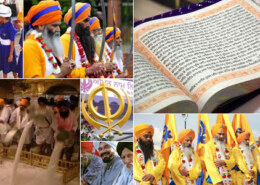
Typically, male Sikhs adopt Singh (lion) and female Sikhs choose Kaur (princess) as their last names. Those who have undergone the khanḍe-kī-pahul, the Sikh initiation ceremony, can also be identified by the Five Ks: uncut hair (Kesh); an iron/steel bracelet (kara); a Kirpan, a sword carried in a gatra strap; Kachehra, a cotton undergarment; and a Kanga, a small wooden comb. Male Sikhs who have received the baptism cover their hair with a turban, while baptized female Sikhs have the choice to wear one. Although the greater Punjab region in India is the historical heartland of the Sikhs, significant Sikh communities exist around the world.
Manage Cookie Consent
We use cookies on our website to give you the most relevant experience by remembering your preferences and repeat visits. By clicking “Accept All”, you consent to the use of ALL the cookies. However, you may visit "Cookie Settings" to provide a controlled consent.
Functional
Always active
The technical storage or access is strictly necessary for the legitimate purpose of enabling the use of a specific service explicitly requested by the subscriber or user, or for the sole purpose of carrying out the transmission of a communication over an electronic communications network.
Preferences
The technical storage or access is necessary for the legitimate purpose of storing preferences that are not requested by the subscriber or user.
Statistics
The technical storage or access that is used exclusively for statistical purposes.The technical storage or access that is used exclusively for anonymous statistical purposes. Without a subpoena, voluntary compliance on the part of your Internet Service Provider, or additional records from a third party, information stored or retrieved for this purpose alone cannot usually be used to identify you.
Marketing
The technical storage or access is required to create user profiles to send advertising, or to track the user on a website or across several websites for similar marketing purposes.





Respected Prince Kumar ji,
Waheguru ji ka Khalsa, Waheguru ji ki Fateh!
In response to your question, the undersigned wants to brief you about Sikh and Sikhism as under:-
1. “Sikh” is a “Seeker of Truth” and “Sikhism” stands for:-
(i) Oneness of Humanity;
(ii) No discrimination owing to gender, race, caste, creed, or color;
(iii) No empty rituals & worthless religious practices;
(iv) No life after death theories. Rather, it stands for salvation/emancipation, during the life time on getting rid of vices.
2. Further, Sikhism:-
(i) teaches a Sikh to live his life in the present, as per Hukam of Akalpurakh and teachings of ever living Guru, Sri Guru Granth Sahib;
(ii) expects a Sikh to earn an honest living, remain connected with Akalpurakh all the time and share his honest earning with poor and needy;
(iii) expects a Sikh to be compassionate, kind, tolerant and is to love all i e. he is to reach the mental state of seeing Akalpurakh in everyone and hence having friends only and no enemies;
(iv) expects a Sikh to serve the humanity, without any distinction of caste, creed and religion.
3. Guru Granth Sahib teaches a person/Sikh to get rid of vices, become a righteous/virtuous person. The goal of becoming a righteous (Sachiara)/virtuous person was laid down by the First Guru Person Guru Nanak Sahib, in the first Pauri (stanza) of Jap Baani itself, when he said:-
Kiv Sachiara hoiey, Kiv Kude Tute Pal,
Hukam Rajai Chalna, Nanak likhya Naal.
ਕਿਵ ਸਚਿਆਰਾ ਹੋਈਐ ਕਿਵ ਕੂੜੈ ਤੁਟੈ ਪਾਲਿ ॥ ਹੁਕਮਿ ਰਜਾਈ ਚਲਣਾ ਨਾਨਕ ਲਿਖਿਆ ਨਾਲਿ ॥੧॥
4. Once a person/Sikh achieves the goal of becoming a righteous/virtuous person and becomes one with Akalpurakh and Shabad Guru, who are spiritually embodiment of each other, he will live a disciplined life and achieve the stage of spiritual equipoise and spiritual bliss. The main goal is to achieve spiritual emancipation/salvation (enlightenment) in this life itself since there is no concept of salvation/emancipation, after death, in Sikhism.
5. Imbibing the above teachings, of Guru Granth Sahib, is what is called Sikhi.
6. Hope it helps. If you have any further questions, please do ask. If you find any deficiencies, please point out the same, for improvement in future.
Regards,
Your Brother
Great veer ji🙏
Please watch this video for better understanding.
Sikhs are followers of Sikhism, a religion that believes in one God and emphasizes kindness, equality, and helping others. Sikhism originated in Punjab, India.
A Sikh is an adherent of Sikhism, a monotheistic and pantheistic religion that emerged in the 15th century in the Punjab region of India. They are also a member of the Sikh community and consider themselves disciples of the Guru.
As per the Guru Granth Sahib, the sacred scripture of Sikhs, a Sikh is described as someone who identifies as a follower of the True Guru. They rise early in the morning to meditate on the Name of the Lord, bathe, and cleanse themselves in a sacred pool. Following the Guru’s guidance, they chant the Lord’s Name, which leads to the erasure of all sins and negativity. At sunrise, they sing Gurbani, meditating on the Lord’s Name whether sitting or standing. One who meditates on the Lord with every breath and morsel of food pleases the Guru’s Mind. Those who receive the kindness and compassion of the Lord and Master are recipients of the Guru’s Teachings. Servant Nanak humbly seeks the dust of the feet of such a Gursikh, who not only chants the Naam themselves but also inspires others to do so.
According to Article I of the “Rehat Maryada,” the Sikh code of conduct and conventions, a Sikh is defined as any human being who firmly believes in One Immortal Being, the ten Gurus from Guru Nanak to Guru Gobind Singh, Guru Granth Sahib, the teachings of the ten Gurus, and the baptism bestowed by the tenth Guru. Such a person does not owe allegiance to any other religion. Sikhs uphold the belief in the equality of all humans, the concept of universal brotherhood, and the existence of One Supreme God, both transcendent and immanent, known as Ik Onkar.
Guru Nanak, the founder of the Sikh religion, received direct revelations from God after being called to the Divine court during deep meditation by a river. God instructed him to drink from the cup of Naam (Path/Essence of God) and elevated him to the highest status. From that point on, he was known as Guru Nanak, tasked with teaching that there is one God, that all of humanity is one, and that religious divisions are human constructs. The Guru disseminated his teachings wherever he went and, when necessary, performed miracles. Toward the end of his life, he had followers from various backgrounds and faiths. The Guruship was subsequently passed down through nine other Gurus, who were believed to carry the divine light of God within them. These Gurus both fortified and expanded the Sikh faith and the revelations of God. The final Guruship was bestowed upon a combined institution of the holy book (Granth) enshrined in The Guru Granth Sahib Ji and the people (Panth), known as the Guru Khalsa.
Typically, male Sikhs adopt Singh (lion) and female Sikhs choose Kaur (princess) as their last names. Those who have undergone the khanḍe-kī-pahul, the Sikh initiation ceremony, can also be identified by the Five Ks: uncut hair (Kesh); an iron/steel bracelet (kara); a Kirpan, a sword carried in a gatra strap; Kachehra, a cotton undergarment; and a Kanga, a small wooden comb. Male Sikhs who have received the baptism cover their hair with a turban, while baptized female Sikhs have the choice to wear one. Although the greater Punjab region in India is the historical heartland of the Sikhs, significant Sikh communities exist around the world.